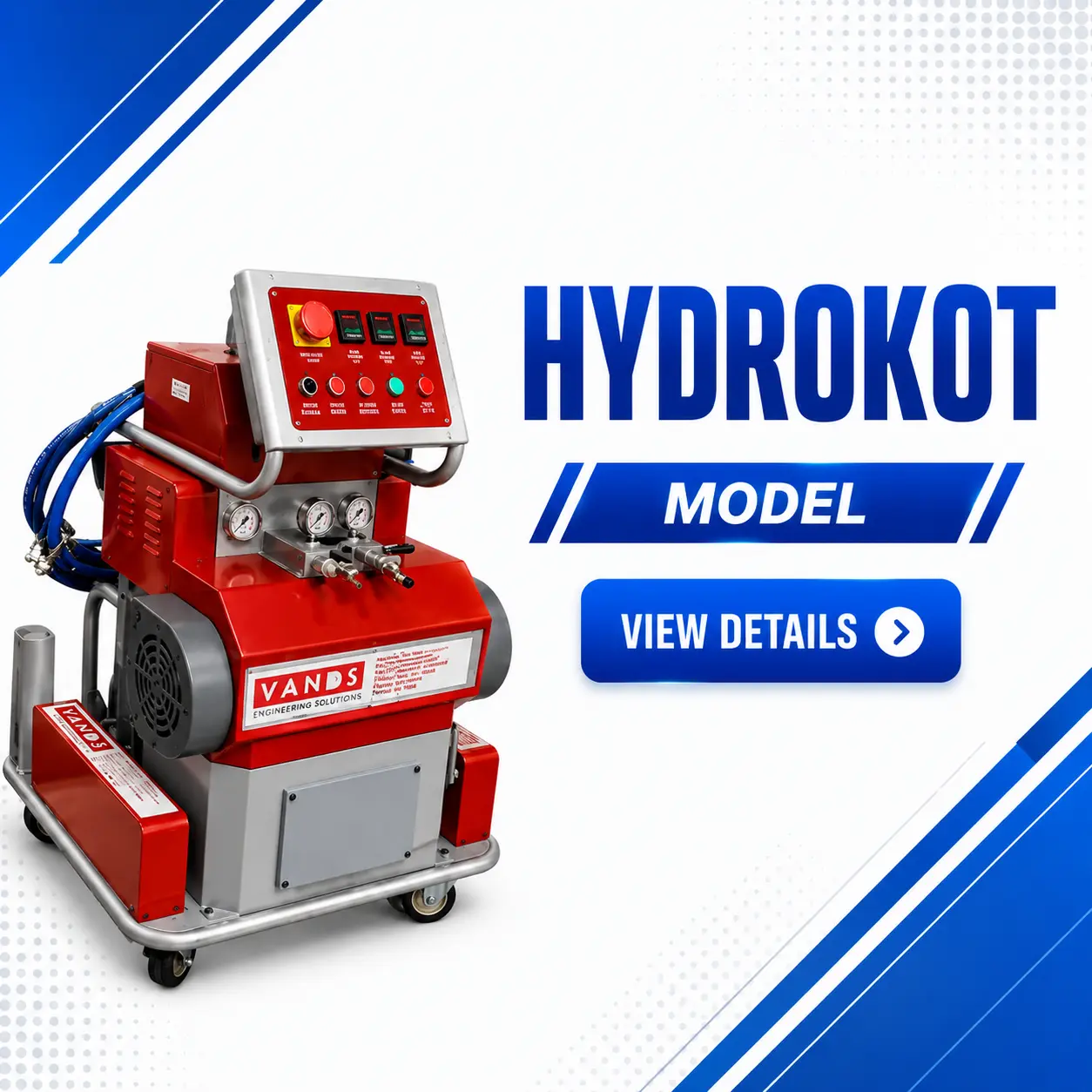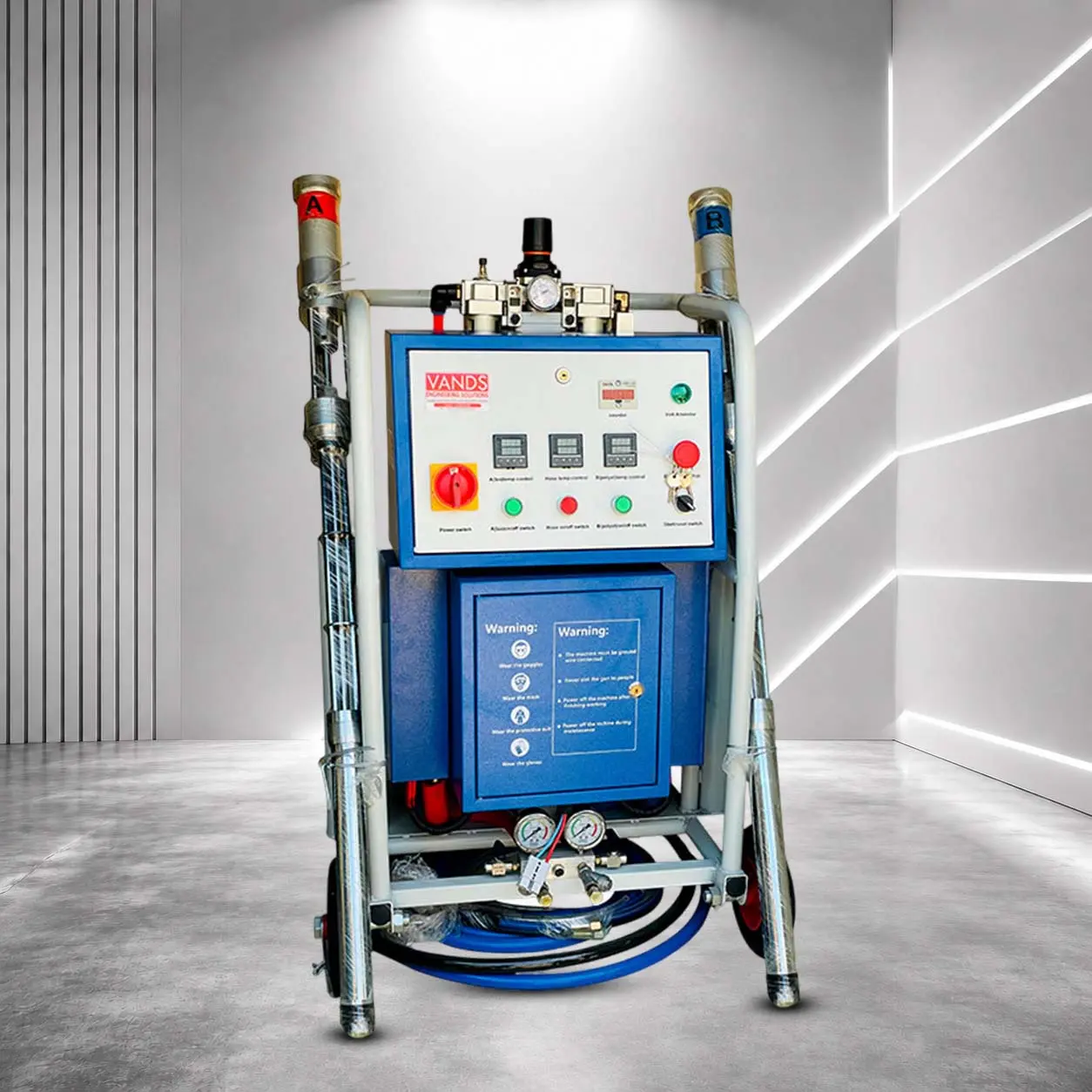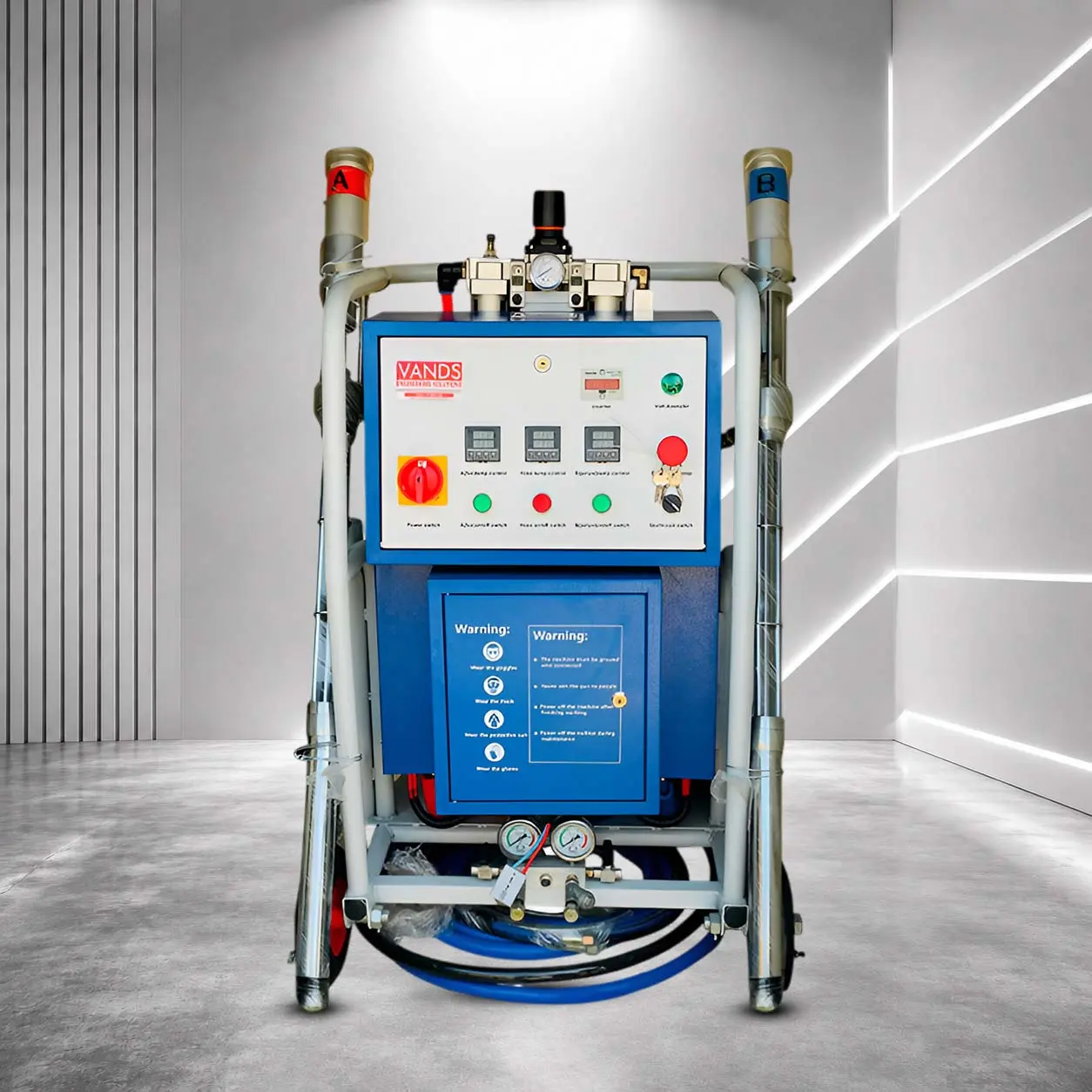
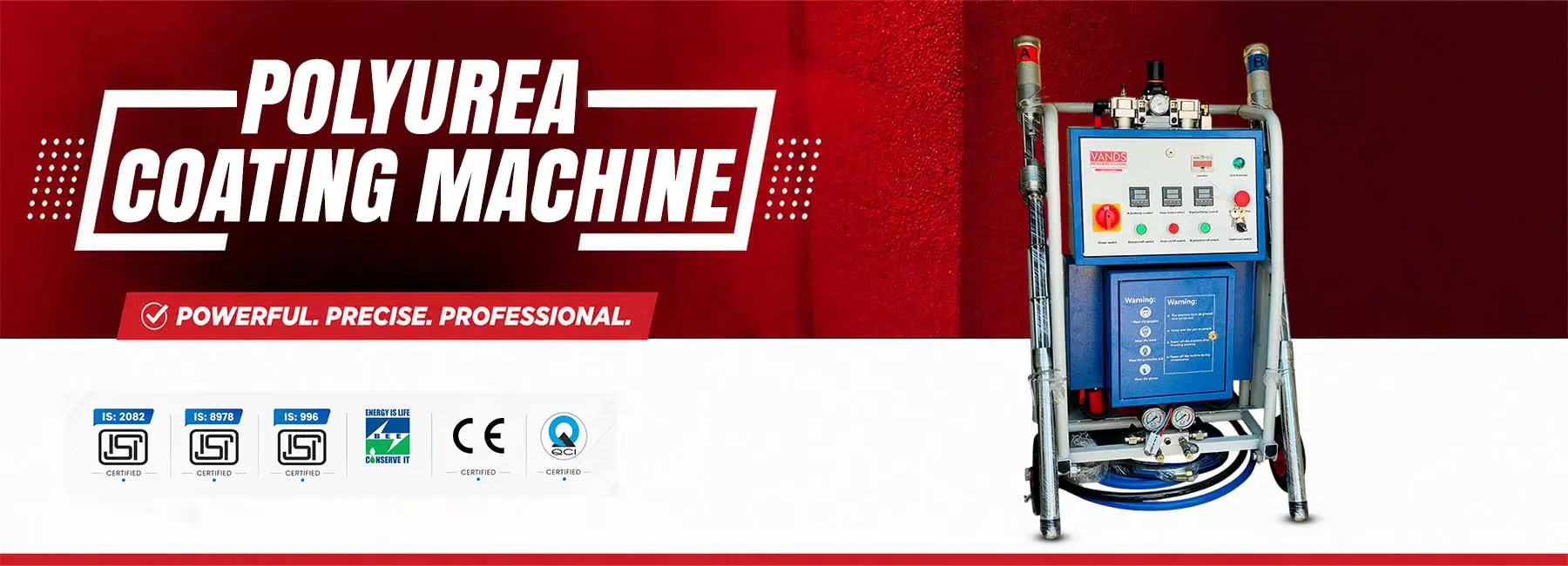
Polyurea Coating Machine

Request a Free Quote


    icon Various Models

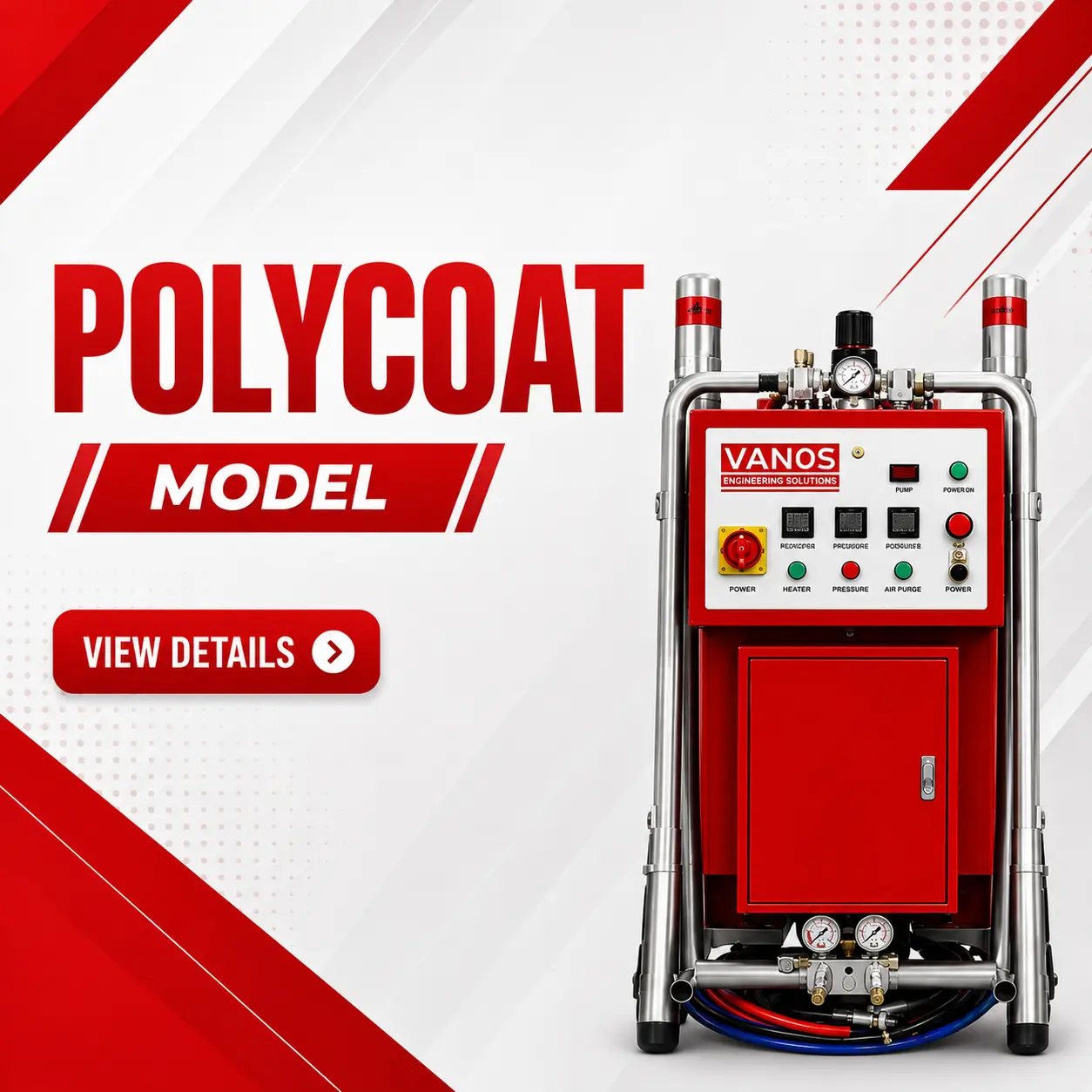
    Polyurea Coating Machine Models

    Polyurea Coating Machine
    icon About Our Product

    Get Fast-Curing, Long-Lasting Coatings with Our Polyurea Machine

    Polyurea is a non-permeable polymer used in moisture and water insulation to protect structures and in a coating process. The material creates protective coatings for different surfaces such as roofs, tanks, and floors. Polyurea coating machines are devices that spray polyurea material to accomplish insulating projects.

    The machine works by mixing two components, typically a resin and a hardener, which are then sprayed onto the surface to form a long-lasting and waterproof layer. At Vands Engineering Solutions, we are proud to be one of the leading Polyurea Coating Machine Manufacturers in India. Our advanced machines are built with cutting-edge technology to meet the demands of the toughest industrial applications.

    Our 100% Satisfaction Guarantee Let's Work Together

    Arrowsd
    Contact us Now (+91) 88820-57687

    India's Leading Polyurea Coating Machine Manufacturer

    We provide high-quality conventional and custom-built multiple-component equipment for applying a wide range of polyurea, polyurethane, and hybrid coatings. Whether you want to extend your existing services or need an entry-level system, we offer the high-quality polyurea spray machine you need.

    We are one of the best Polyurea Coating Machine Suppliers in India who offer only quality products to our customers. All our products are built the materials sourced by trusted vendors. Our professional team has years of combined coatings and equipment expertise and is experienced to assist you in selecting the appropriate polyurethane or polyurea coating machine for your application, regardless of budget, scale, or material constraints.

    Polyurea Coating Machine
    Polyurea Coating Machine

    Key Features of Polyurea Coating Machine

    01. High-pressure spraying system

    pushes resin and hardener through the nozzle with enough force to build a dense, even layer of coating.

    the two materials combine right at the point of spraying, so the coating cures the way it’s supposed to.

    holds the material at the right heat all through the job, which matters a lot since polyurea reacts badly to temperature swings.

    easy to move between sites without needing extra hands to relocate it.

    keeps output steady through continuous industrial spraying, even over long sessions.

    keeps debris and impurities out of the mix, so the nozzle and hoses don’t clog up unnecessarily.

    icon Applications

    Where Polyurea Coating Machine Are Used?

    Roof Coatings

    service4icon-1
    Builds a tough, waterproof layer over roofing that resists cracking and weather wear far better than most traditional coatings.

    Blast Mitigation

    service4icon-1
    Adds a layer that's flexible but strong, exactly where absorbing impact without failing actually matters.

    Waterproofing

    service4icon-1
    Forms a non-permeable barrier on tanks, floors, and structural surfaces, keeping moisture from working its way in over time.

    Slip and Skid Resistance

    service4icon-1
    Leaves surfaces with a textured, durable finish that holds up under foot traffic or vehicle movement where grip is genuinely needed.

    Primary and Secondary Containment

    service4icon-1
    Lines storage and containment areas with a coating built to handle chemical exposure and constant wear and tear.

    Mining and Mineral Processing

    service4icon-1
    Coats equipment and surfaces dealing with rough, abrasive conditions every day, holding up where standard coatings tend to wear through fast.

    Frequently Asked Questions

    01. What's the difference between polyurea and polyurethane coating machines?
    Both rely on similar dual-component spraying tech, but the materials themselves behave differently. Polyurea cures a lot faster, often within seconds, and handles moisture and temperature changes better. Polyurethane’s usually a bit more flexible to apply and slightly cheaper, so the choice mostly comes down to how fast you need it to set and what it’s going on.
    Fast – we’re talking seconds to a couple of minutes after it’s sprayed, way quicker than most other coating materials out there. That’s honestly one of its biggest advantages, since it lets teams get back to using a coated surface sooner, which cuts down downtime on bigger jobs.
    It comes down to a resin and a hardener, which react instantly the moment they’re combined through the spray gun. That reaction is what gives polyurea its tough, waterproof finish. Getting the 1:1 mixing ratio exactly right matters here too, since even a small imbalance can throw off how well it cures.
    Polyurea’s pretty sensitive to temperature while it’s being sprayed – too cold or too hot, and it can affect how evenly it cures and bonds to the surface. That’s the whole reason automatic temperature control is built into these machines, keeping the resin and hardener at a steady heat throughout the job.
    Mostly, yes. It forms one seamless, non-permeable layer with no joints for water to sneak through, and it holds up better against cracking, UV exposure, and general wear than a lot of conventional waterproofing options. Still, the right pick depends on the surface, the budget, and what the project actually needs.
    Not too much, really – clean the spray gun, hoses, and filtration system after every job, since dried material is what usually causes clogging. Check the heating and pump systems now and then too, especially if the machine’s running continuously on longer projects, just to avoid any unexpected downtime.