| Ratio | 53:1 | 60:1 | 73:1 | 80:1 |
|---|---|---|---|---|
| Output per Cycle | 220 cc | 180 cc | 220 cc | 160 cc |
| Air Motor | 250 mm | 250 mm | 300 mm | 300 mm |
| Stroke Length | 120 mm | 120 mm | 120 ltr. | 120 mm |
| Recommended Spray Volume @ 50 Cycle per min | 12.5 L/m | 9 L/m | 7.5 L/m | 9 L/m |
| Air Inlet Pressure Max. | 6 bar | 6 bar | 6 bar | 6 bar |
| Output Pressure Max. | 318 bar | 360 bar | 418 bar | 480 bar |
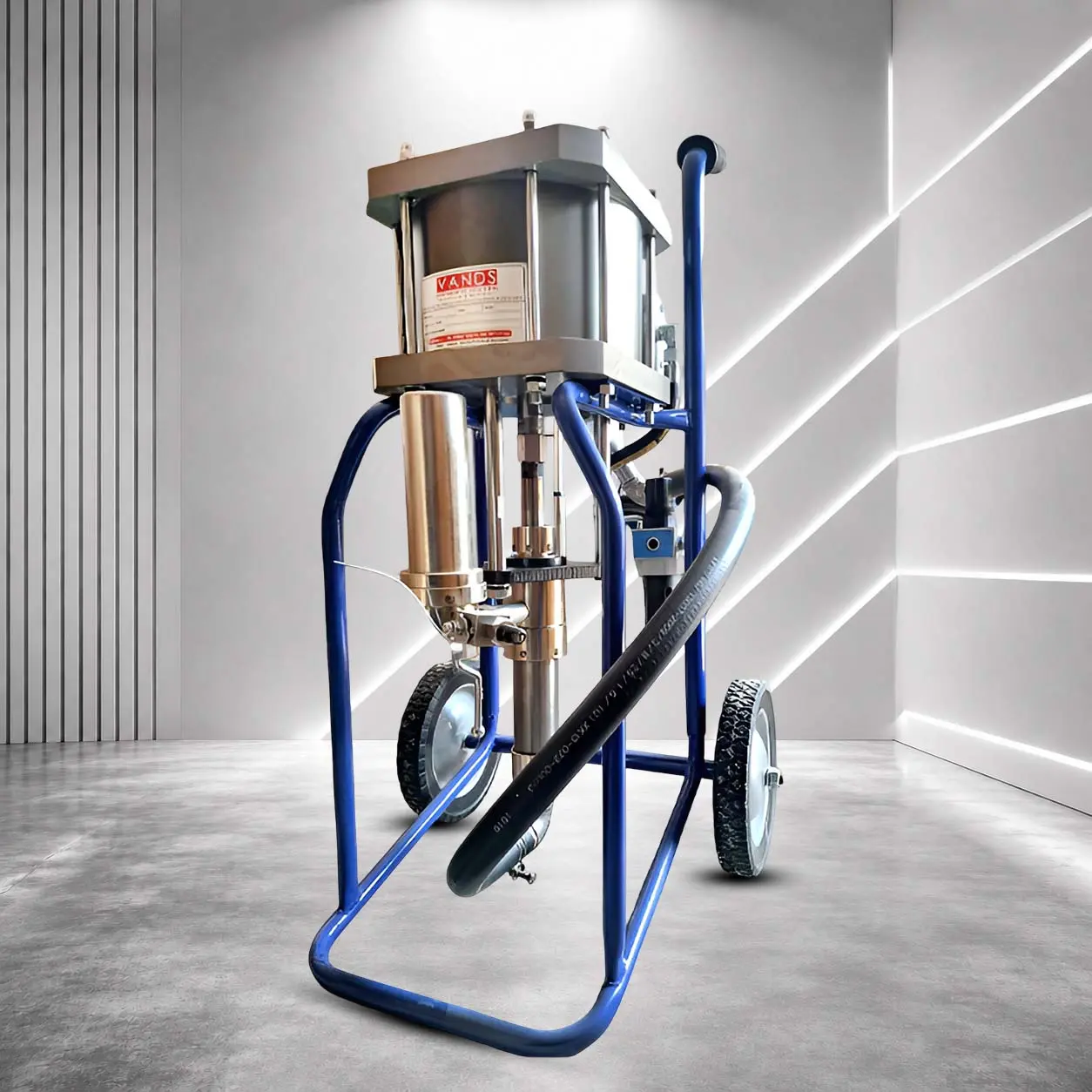
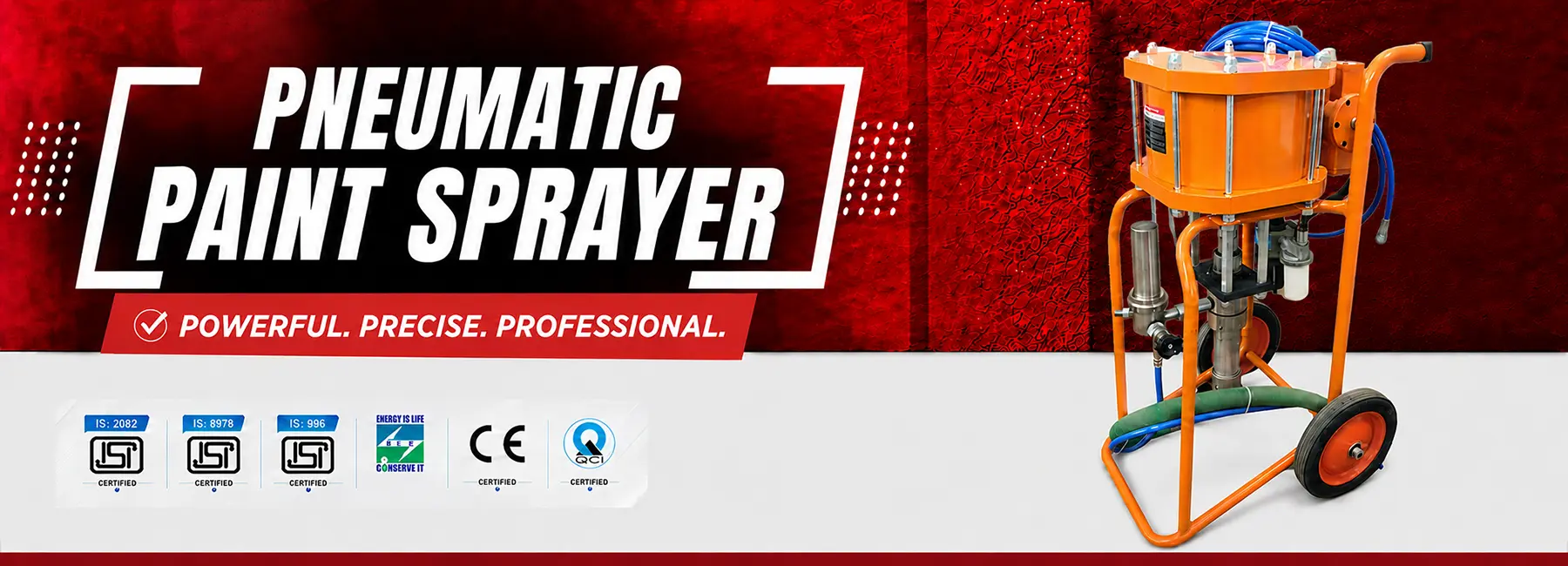
The most powerful devices for protective coating are pneumatic paint sprayers. The technology gives never-before-seen applicator output figures, pressure ratios, and pumping capacity. These are built to endure the harshest climatic conditions and are capable of handling the most demanding protective coatings and corrosion control treatments. Vands Engineering Solutions is the go-to brand for high-performance paint sprayers. We are reliable Pneumatic Paint Sprayer Manufacturers in India and our products are distinguished for their high pump quality and unrivaled performance, especially in difficult settings. Our sprayers are extremely reliable and efficient, requiring little maintenance and troubleshooting.
Paint spraying is a specialist skill that necessitates professional-grade equipment for maximum results. That’s where Vands Engineering Solutions pneumatic paint sprayers come in. We are the leading Pneumatic Paint Sprayer Suppliers in India. Our sprayers are designed to create a smooth, even finish with minimal scattering and are widely acclaimed in the industry for their precision and quality. Regardless of the project, our paint sprayers deliver a superb finish, making them a dependable choice for both professionals and DIY enthusiasts. Contact us for more!
holds up for years without the body or internals giving out early.
moves paint through quickly and doesn’t corrode, even with harsher industrial coatings running through it.
keeps going steady through long, continuous spraying sessions without ever stalling mid-job.
fewer parts that can go wrong means less time lost to repairs and servicing.
pushes thick, high-viscosity coatings through the nozzle without a struggle, something lighter sprayers just aren’t built for.
keeps output consistent through long jobs, which matters a lot when covering large industrial surfaces.
It depends on the pump ratio, flow rate, and overall build quality. A machine rated at 70:1 fluid pressure, made for heavy industrial coatings, is going to cost more than a lighter-duty sprayer. Honestly, it’s better to just tell a supplier what you’re working on and what coating you’re using, and let them quote based on that.
It’s the ratio between the air pressure going in and the fluid pressure coming out. A 70:1 ratio means the pump can push thick, high-viscosity coatings through without much resistance – which is exactly why these machines get used for tough industrial jobs that would clog up a lighter sprayer.
Clean the pump, hose, and nozzle after every job – dried paint is behind most performance problems. Check the packing and seals for wear every so often, keep the air supply system in good shape, and once the spray pattern starts looking uneven, that’s the nozzle telling you it needs replacing.
Usually it’s a clogged nozzle or filter, worn packing, or the air supply not reaching the pump consistently. Sometimes it’s just trapped air after the machine’s been sitting unused for a while. Cleaning the filter and nozzle, checking the air pressure range, and re-priming the pump takes care of most of these issues.
Built well and maintained the right way, these machines usually run for several years, even with heavy industrial use behind them. The rust-resistant parts and stainless steel components help stretch that lifespan further, especially in tougher settings like steel structure coating or nonstop exterior spraying.
A pneumatic sprayer runs on compressed air and is built for heavier, more demanding coatings, with higher pressure ratios like 70:1. Electric sprayers are more compact and better suited to lighter residential or commercial work. For tough anti-corrosion jobs or thick latex coatings, pneumatic models tend to handle it better overall.