
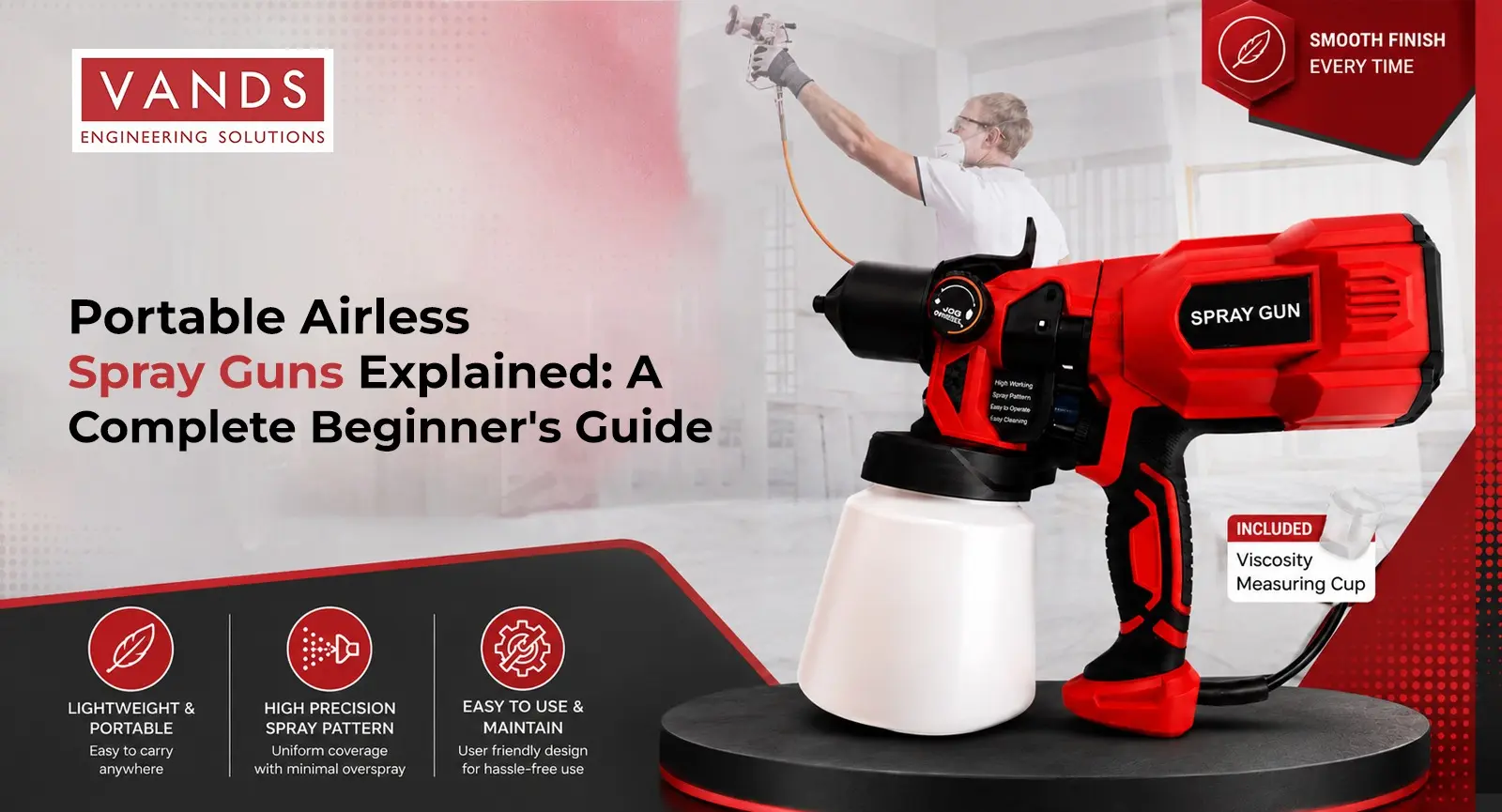
What Is a Portable Airless Spray Gun?
It is a compact painting tool that pushes paint out through a tiny tip using high pressure, instead of relying on compressed air to break it up. That’s actually where the name comes from — no air is involved in breaking the paint into a fine spray. Instead, a pump builds up pressure and pushes the paint through the nozzle on its own.
These tools have been around in professional painting for a while, mostly on job sites and in workshops. But smaller, lighter versions have made their way into home use too, since a lot of people are just tired of rollers leaving streaks or brushes taking forever on large walls and fences.
How Does a Portable Airless Spray Gun Work?
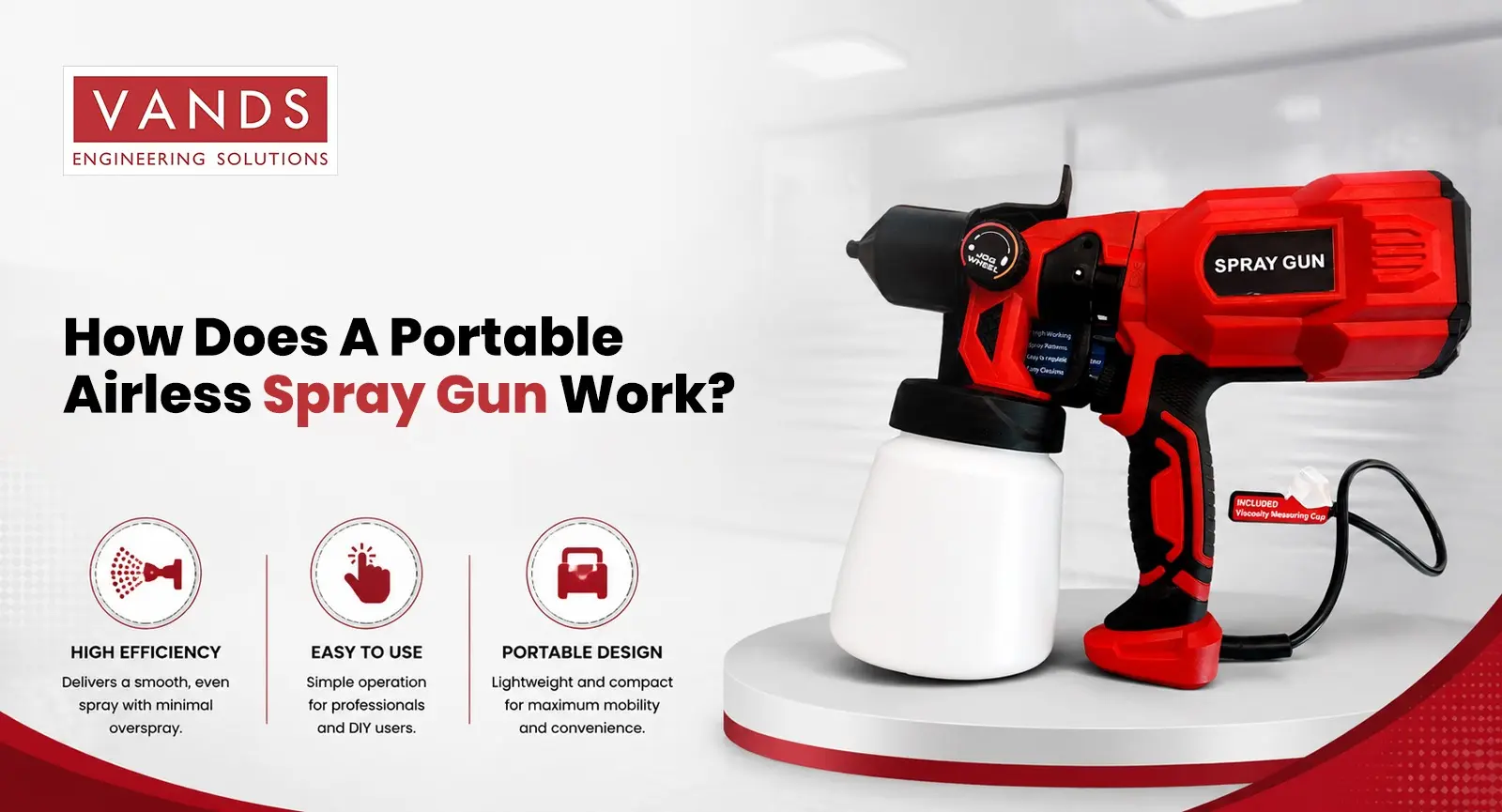
The mechanics behind it sound more complicated than they actually are.
- A motor-driven pump draws paint from a container or reservoir.
- That pump pressurizes the paint, sometimes up to a few thousand PSI depending on the model.
- The pressurized paint then travels through a hose to the spray tip.
- At the tip, it gets forced through a tiny opening, breaking into a fine mist — this step is called atomization.
- The mist lands in an even pattern, covering the surface without needing several passes.
Since there’s no air mixing into the spray, the pattern stays tighter and easier to control, and that’s a big part of why airless guns tend to leave a cleaner finish than compressor-based sprayers do.
Why Choose an Airless Spray Gun Over Traditional Tools?
Rollers and brushes aren’t going anywhere, but plenty of people switch over to a portable airless spray gun the moment they try one on a larger project. Here’s roughly why that happens.
- It covers large surfaces far quicker than a brush or roller could manage.
- The finish tends to come out smoother, without the visible lines or patchy spots.
- It handles thicker coatings without much trouble, including paints that would clog up a regular paint sprayer.
- It gets into corners, textured surfaces, and tight areas a roller usually struggles with.
- It saves physical effort, which matters a lot for painters covering large jobs one after another.
That said, it’s not always the best tool for every situation. Small touch-ups or detailed trim work are often still simpler with a brush, so it’s less about replacing every other tool and more about knowing which one fits the job in front of you.
Where Are They Commonly Used?
Airless paint sprayers show up in more places than people usually expect.
- Residential painting — walls, ceilings, fences, exterior surfaces.
- Commercial and industrial projects, where large areas need coating fast.
- Furniture and cabinetry work, where a smooth, even finish really matters.
- Automotive touch-up work, in some cases, depending on the gun’s tip size and pressure settings.
- Construction sites, for coating structural elements before or after installation.
Because these guns come in different sizes and power levels, they end up being useful for both a weekend home project and a full-scale commercial paint job.
What to Check Before Buying an Airless Spray Gun
Portable Airless Spray Guns aren’t all built the same way, so a few things are worth comparing before picking one.
- Motor power — stronger motors handle thicker paints and bigger jobs more comfortably.
- Pressure settings — adjustable pressure helps when moving between thin stains and heavier exterior paints.
- Tip size — different tips change how wide and how heavy the spray pattern comes out.
- Weight and portability — a lighter gun makes a noticeable difference over a long painting session.
- Hose length — longer hoses mean more freedom to move without dragging the whole setup around.
- Build quality — metal parts tend to outlast plastic ones with repeated use.
- Cleaning and maintenance — a gun that’s easy to take apart saves a lot of hassle once the job is done.
Common Mistakes First-Time Users Make
A lot of people run into the same few issues the first time they use a spray paint gun.
- Not thinning the paint properly, which leads to clogging or uneven spray.
- Holding the gun too close or too far from the surface, which causes drips or thin, patchy coverage.
- Skipping a test spray on scrap material before jumping into the real job.
- Ignoring proper cleaning after use, which shortens the life of the pump and tip.
- Using the wrong tip size for the type of paint or coating being applied.
Most of these issues go away with a bit of practice, and starting with a test surface really does save time later.
Final Thoughts
A portable airless spray gun genuinely changes how painting gets done, especially for anyone dealing with large walls, fences, or repeated jobs where a roller just takes too long. It’s faster, gives a smoother finish, and once you get past the initial learning curve, it’s honestly not that hard to use well.
For anyone looking to buy one, Vands Engineering Solutions Pvt Ltd manufactures and supplies airless paint sprayers built for everyday home use as well as heavier commercial painting work, with the kind of build quality and support that holds up over time.
FAQs

Vands Engineering Solutions
Vands Engineering Solutions is a company that specializes in manufacturing Airless Painting Machines in India. To provide top-notch products and services, our experienced and dedicated team utilizes the latest technology to achieve perfection.
