Introduction
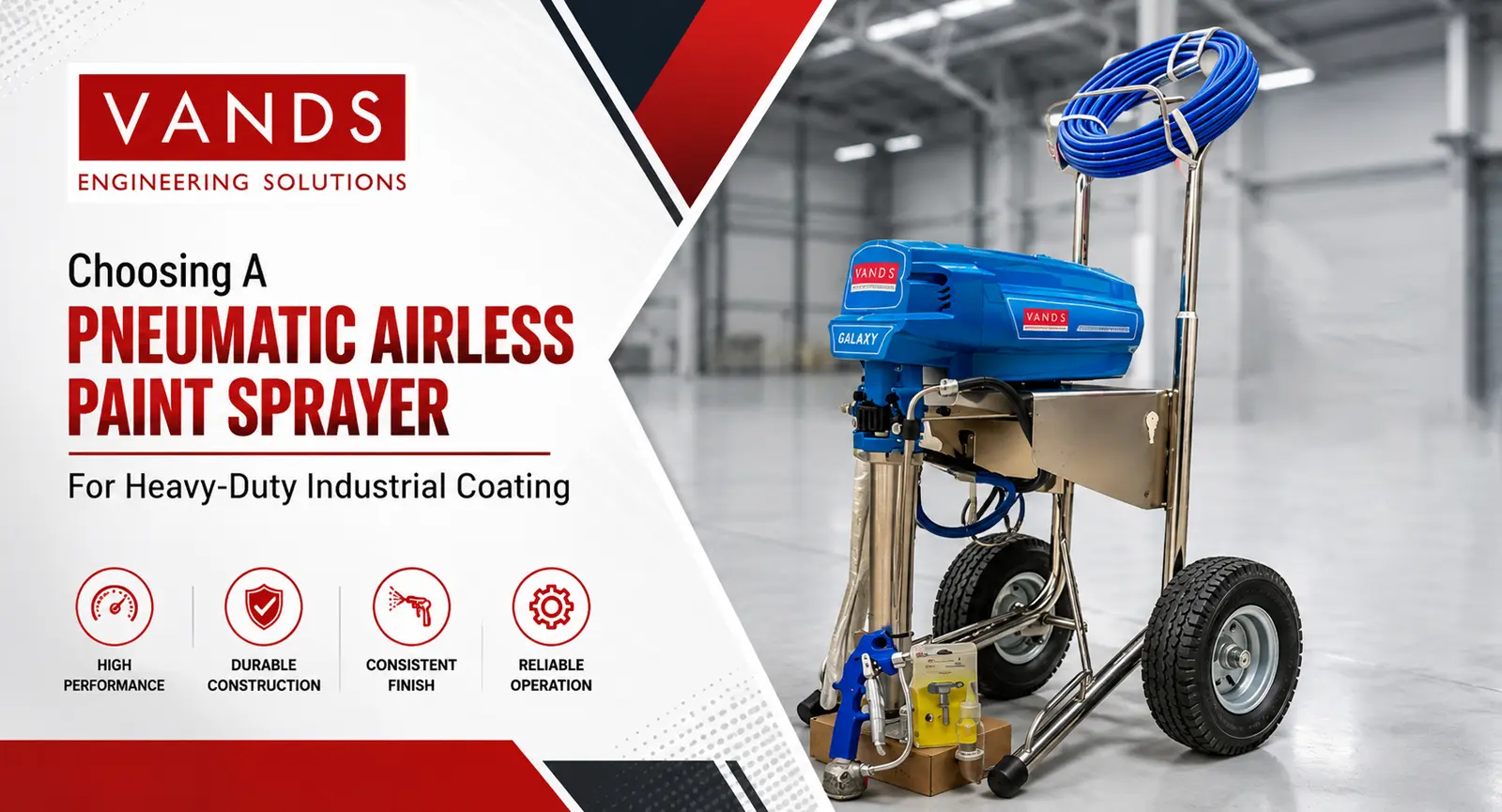
Anyone who’s tried coating a steel structure or a warehouse wall with a regular spray gun knows exactly how this goes wrong. The paint’s too thick, coverage turns patchy, and a work that should’ve taken a day drags into three. Industrial coating just isn’t painting a living room. You’re dealing with epoxy, thick primers, corrosion-resistant coatings, and surfaces stretching hundreds of meters. That’s where a Pneumatic Airless Paint Sprayer is used. It skips the whole air-mixing step and just uses raw pressure to push through thick material, which is exactly what this kind of coating work needs.What a Pneumatic Airless Paint Sprayer Is Doing?
Instead of mixing air into the paint like a regular spray gun, this thing pressurizes the paint itself and forces it through a tiny tip. That pressure is what breaks it into a fine, even spray, and it’s also what lets it handle material most sprayers would just choke on. This matters more than it sounds. Thick coatings like epoxy or heavy-duty primers usually need thinning before a regular sprayer can even touch them. A pneumatic airless sprayer skips that step most of the time altogether, which saves time and keeps the coating at full strength instead of watering it down. That means coverage moves noticeably faster across large surfaces, the finish comes out even without the thin patches you’d get from a roller, and since the pressure’s so precise, less paint ends up floating around as overspray. Less wasted material, less cleanup afterward.Where Airless Paint Sprayers Are Commonly Used?
Pneumatic Airless Paint Sprayers are commonly used in a handful of industries, and it’s not hard to see why. Steel structure coating is a big one; beams, frames, fabricated metal, all of it needs something that can push through heavy coatings without struggling. Construction and infrastructure work rely on it, too, especially bridges and big concrete surfaces that would take forever with anything smaller. Manufacturing units use it to coat equipment on the production floor. Shipyards lean on it for marine coatings that need to survive outdoor conditions. And industrial maintenance teams reach for it whenever machinery, pipelines, or storage tanks need repainting properly, not half-done.Where Does Electric Fit In?
A pneumatic airless paint sprayer isn’t the right choice for every work, and that’s perfectly fine. An Electric Airless Paint Sprayer is often a better option for projects that don’t require high-volume painting but still need a smooth, professional finish. Electric units are hydraulic piston-driven, plug straight into a power source, and skip the compressor entirely. That alone makes them a lot easier to move between sites. Most run somewhere between 1500 and 3000 PSI, with motors around 1300 to 1500 watts, and they’re compact enough, usually 12 to 14 kg, to carry without any problem. Hose lengths usually run 15 to 25 meters, so reaching different spots on a site rarely means dragging the whole unit around. They also come with interchangeable tips, so the same machine switches between wide coverage for walls and smaller, precise work for furniture or detailed surfaces.Pneumatic or Electric Airless Paint Sprayer: How You’d Actually Decide?
Things to Check Before Buying
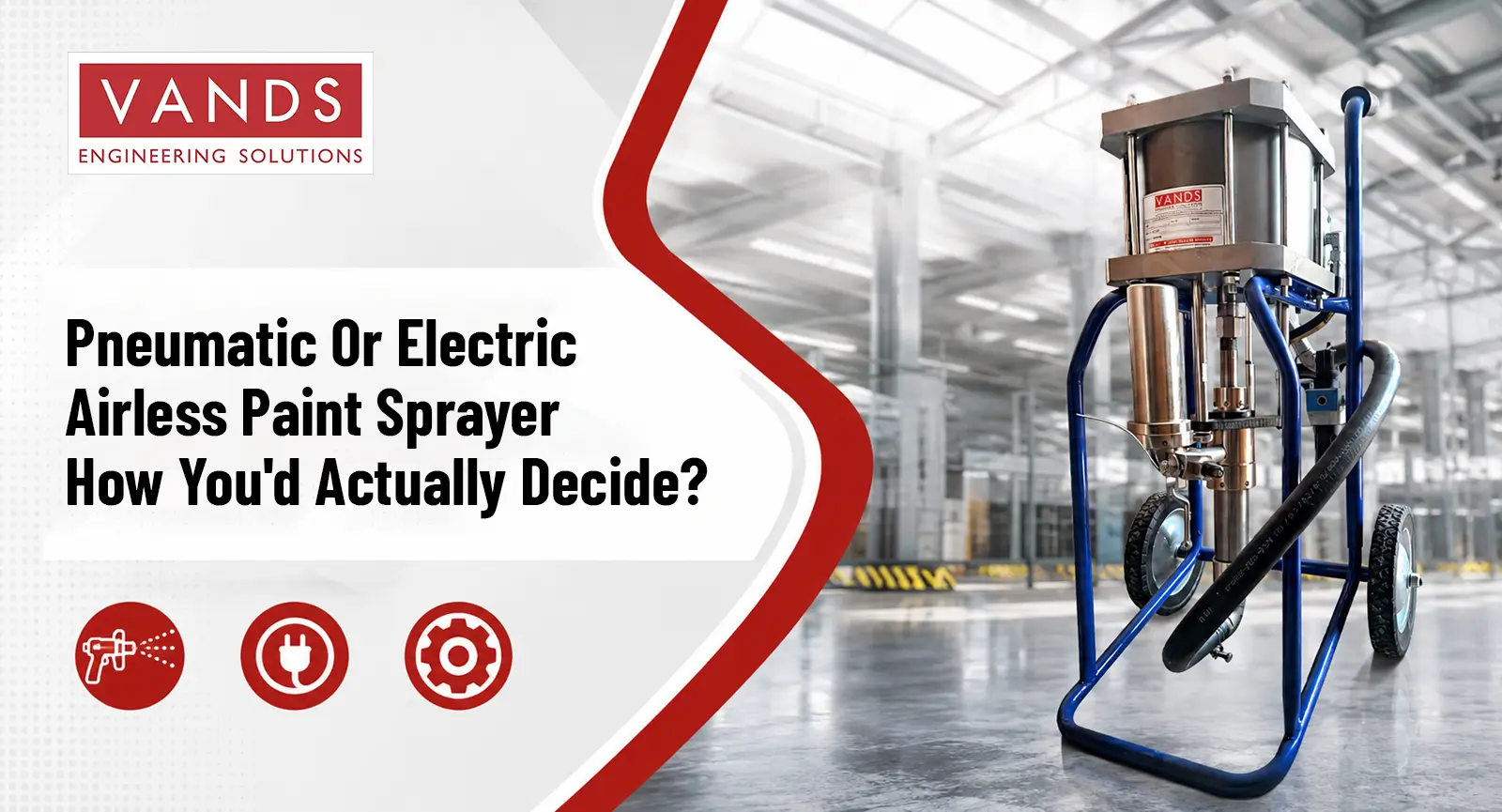
Before buying a Pneumatic Airless Paint Sprayer, it helps to think about how it will actually be used in your day-to-day work. A good choice is not just about the product title or price. It is about whether the machine matches your requirements or not. It comes down to the kind of work you’re doing more than which one is more powerful. If you’re coating large steel structures, handling thick industrial coatings daily, or running continuous, heavy-volume tasks, a Pneumatic Airless Paint Sprayer is the best option to use. It’s just built for that scale. If your work’s more mixed, moving between sites, switching between wall painting and smaller detailed work, or you’d rather skip dealing with a compressor altogether, an Electric Airless Paint Sprayer tends to fit better. It’s flexible in a way pneumatic setups aren’t really designed to be.What to look at
- The type of coating work you handle most often
- The size of the surface area you need to cover
- How much work the sprayer will do each day
- Whether it fits your current industrial setup
- How easy it is to maintain and operate
Why Vands Engineering Solutions Keeps Coming Up?
Vands Engineering Solutions has been manufacturing airless painting equipment since 2013, and their range covers both pneumatic airless paint sprayers and Electric Airless Paint Sprayer options, along with wall painting machines, kerb painting machines, and related equipment. Their pneumatic sprayers are built for tough, high-output work, known for solid pump quality and reliable performance even in harsh conditions. Their electric range uses hydraulic piston-driven technology and premium raw materials, giving contractors flexibility for both industrial and commercial work. If you’re not sure which type actually fits your project, it’s worth reaching out to their team directly and just walking them through what you actually need.Conclusion
Heavy industrial coating work needs equipment that won’t slow down halfway through the work, and that’s exactly what a Pneumatic Airless Paint Sprayer is built for. But it’s not the only answer; an Electric Airless Paint Sprayer is also one of the best products to use, depending on what your work actually demands. If you’re still confused between these two and are not able to decide on which one will be the best choice for your work, it’s worth talking to Vands Engineering Solutions about your project before deciding, so you end up with equipment that fits your requirements.FAQs
Vands Engineering Solutions
Vands Engineering Solutions is a company that specializes in manufacturing Airless Painting Machines in India. To provide top-notch products and services, our experienced and dedicated team utilizes the latest technology to achieve perfection.
