
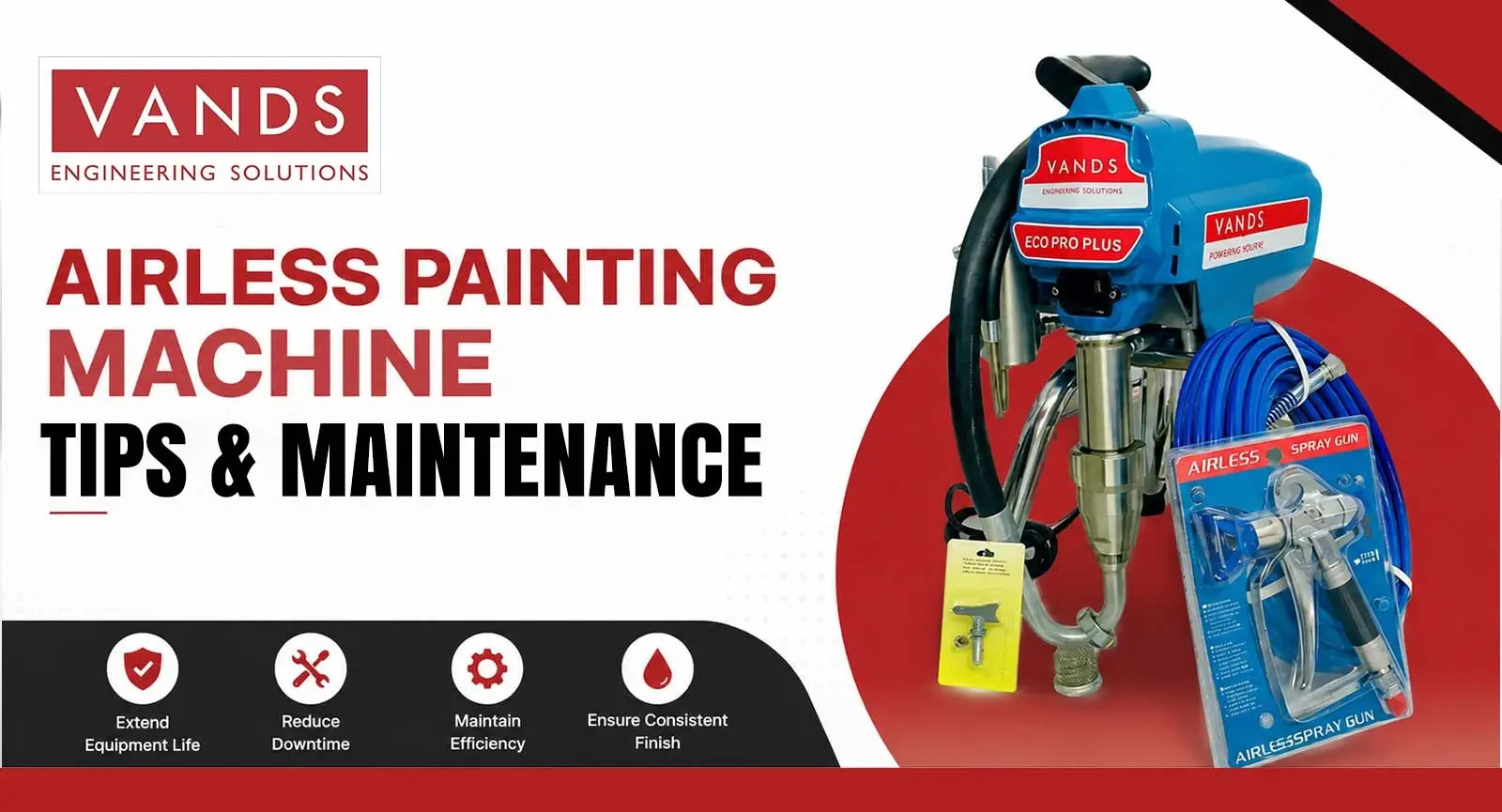
Picking the right Airless Painting Machine comes down to one main thing: maintenance. If you buy a machine that looks good but you don’t clean it after every use, it will clog, lose pressure, or worse. If you run it too hard without checking filters, hoses, or tips, you waste money and time. The right machine is the one that matches the real work your jobs need, not just the price tag.
Why You Can’t Just Ignore Maintenance on an Airless Painting Machine
Maintenance decides whether your machine can spray smoothly, day after day, without fighting clogs, pressure drops, or broken hoses. An airless painting machine that is too neglected will see high repair costs, lose pressure quickly, and put extra strain on your pump and motor.A machine stuffed with features isn’t always the right call. It can be tough to clean, tie you to expensive parts, and cost more than needed. Match your machine to the real work your jobs must do, not to a guess or a random feature list.Right maintenance is not only about fixing the breakdowns. It is about strong pressure, smoother spraying, and lower expenses down the line. A machine that gets cleaned builds trust on the job, and it also reduces downtime without drama.How to Provide the Real Maintenance Your Machine Needs
The first step is to know the actual work your machine will do most of the time. This is not just about spraying paint. It includes:- cleaning after every use with water or solvent
- checking filters daily for clogs
- inspecting hoses for cracks, kinks, or abrasions
- tightening packing nuts when paint leaks
- storing with pump rod down to reduce corrosion
Matching Your Airless Painting Machine to Working Conditions
Once you know your maintenance needs, you need to match them to your machine and working conditions. A machine used for light, occasional touch-ups can be different from one used for heavy, near-continuous spraying on big jobs.Things to think about:- how many hours per day or per week you spray
- how thick or thin your paint is (latex vs. oil-based)
- whether you work indoors, outdoors, or in cold climates
- the environment (dusty, wet, corrosive, or clean shop)
Common Mistakes When Using This Machine
Some mistakes happen often when people use an airless painting machine:- cleaning only when the machine stops instead of after every use
- using filters that are too clogged, leaving no room for flow
- selecting a tip that is too small for the material, which wastes pressure and time
- ignoring the effect of cold weather, dried paint, or high pressure
Smart Habits for Taking Care of Your Machine
To keep your airless painting machine running right:- flush with water or solvent after every use, depending on paint type
- check intake filter before each job and rinse if dirty
- examine spray nozzle for blockages and soak in solvent if needed
- strain paint before pouring to remove lumps or debris
- talk to a supplier who knows painting machines and can suggest the right tip, filter, and packing
What Modern Airless Painting Machine Maintenance Actually Looks Like
Airless painting machine care today is less about waiting for breakdowns and more about preventing them. Painter expectations are steady. Job margins are tighter. Material options continue to expand. The crews seeing consistent results are focusing on cleaning, checking, and storing.Clean After Every Use Is a Growth Lever
Fast cleanup is expected. No dried paint is expected. A clear fluid path is expected. When cleaning works well, crews rarely notice. When it fails, they lose pressure. Your cleaning routine directly controls how long your airless painting machine lasts and how many jobs you finish.Quality machine care keeps paint flowing between your pump, hose, and gun without any delays. Even small dried spots can cause clogs or pressure loss.Checking Filters Daily Matters More Than More Pressure
Most crews already have spare filters. The challenge is changing them often enough to make a difference. Clogged filters drag flow down. When your filters are over 20% clogged, performance drops and nobody wins.Your airless painting machine needs to zero in on checking and cleaning filters every day. Replace if punctured or more than 20% blocked.Hose Inspection Is Moving Into Daily Work
Hose damage is becoming more practical to catch early. Hoses do more than just carry paint these days. They’re handling high pressure, solvent exposure, and abrasion too. Check them the right way, and you reduce leaks while improving safety.Check your airless painting machine hoses every time you spray for internal build-up, cracks, kinks, holes, blisters, abrasions, and damage to the hose cover. Use two wrenches when tightening high-pressure hose connections.Tip Care Protects Finish Quality
Tip errors are expensive. They mean bad fan pattern, wasted paint, and operational bills you didn’t need. Crews are kitting out tighter connections between the airless painting machine, filters, and tips to cut down on errors.Clear tips with a couple short bursts of water or solvent with the tip in the reverse position. Clean tips with a soft brush. Replace tips if fan pattern has collapsed.Cold Weather Is Becoming More Deliberate
Cold weather remains part of airless painting machine work. Crews aren’t only counting cold as a problem. They’re sharpening their storage and flushing to recover value and make the next job less painful. Thinner is better for the short term; Pump Armor is better for the long term.Track storage as a strategic habit, not just an operational one. Good machine care makes storage easy and easy for your crew to understand.What to Do If Your Airless Painting Machine Is Losing Pressure
If your airless painting machine is spraying but pressure is low, don’t stress. Here’s what to do:- Check your filter and intake for gaps Find clogs or blockages before the pump.
- Make hoses and tips better Inspect for cracks, kinks, or worn tips.
- Make your flush stronger Better solvent, full-pressure flush, clean water rinse.
- Give it time Cleaning and testing takes time. You need to let changes be tested and pressure stabilize.
Quality Work on the Job Site
When the machine matches the real job, the whole spraying process becomes smoother. Crews know the machine is not being pushed to its limit. Teams see less strain on pumps, hoses, and tips. The job can finish with more confidence.That is the real value of choosing the right airless painting machine and care. It is not about having the biggest machine possible. It is about having the right machine for the work it must do every day.FAQ
1. Why is maintenance the most important factor for an airless painting machine?
Maintenance decides if your airless painting machine can safely spray without clogging, losing pressure, or breaking down mid-job.
2. What should be included when caring for an airless painting machine?
You need to factor in cleaning after every use, filter checks, hose inspection, tip care, and storage with pump rod down.
3. How do you match an airless painting machine to working conditions?
Match machine class and features to spray hours, material type, environment, and whether you work indoors, outdoors, or in cold climates.
4.What happens if you use an airless painting machine with too little maintenance?
The machine will clog, lose pressure faster, and may fail, increasing the risk of downtime and costly repairs.
5. What happens if you run an airless painting machine too hard?
The machine gets harder to control, takes up more repair time and budget, and costs more than needed. It can also be less focused for the job, which leads to wasted paint and unnecessary confusion.
Want reliable airless painting machines with proper specs and solid support? Check Vands Engineering Solutions. Pick a machine that fits your job’s real spraying needs.